Showing posts with label Genre: LGBT. Show all posts

Saturday, 21 June 2014

Book Review: Child of a Hidden Sea by A. M. Dellamonica

Title: Child of a Hidden Sea
Author: A. M. Dellamonica
Genre: Portal Fantasy
Publisher: Tor Books
Date Published: June 24th 2014
Source: Publisher via Netgalley
Rating: 4.5 out of 5 stars

Blurb (taken from Goodreads):
One minute, twenty-four-year-old Sophie Hansa is in a San Francisco alley trying to save the life of the aunt she has never known. The next, she finds herself flung into the warm and salty waters of an unfamiliar world. Glowing moths fall to the waves around her, and the sleek bodies of unseen fish glide against her submerged ankles.

The world is Stormwrack, a series of island nations with a variety of cultures and economies—and a language different from any Sophie has heard.

Sophie doesn't know it yet, but she has just stepped into the middle of a political firestorm, and a conspiracy that could destroy a world she has just discovered… her world, where everyone seems to know who she is, and where she is forbidden to stay.

But Sophie is stubborn, and smart, and refuses to be cast adrift by people who don't know her and yet wish her gone. With the help of a sister she has never known, and a ship captain who would rather she had never arrived, she must navigate the shoals of the highly charged politics of Stormwrack, and win the right to decide for herself whether she stays in this wondrous world... or is doomed to exile.


Why I read it:  

I love portal fantasies and anything nautical, so this looked right up my alley.

My thoughts:

There was so much I loved about this book: the characters, the nautical setting, the irreverent tone...

I’m going to discuss the characters first, because they were what I enjoyed most about this novel. The main character was Sophie, a thrill-seeking American biologist in her mid-twenties. Adopted at birth, she finally tracks down her biomom – and then gets accidentally transported into the world of Stormwreck for her troubles. (As her brother Bran later comments, “It’s not enough to go looking for a few biological relatives, you mad overachiever? You have to find a whole birth planet.”) For a middle-class girl from San Francisco, Sophie’s skillset is remarkably apt for this alternative archipelago world - she can dive, climb, sail, and is handy with a camera – but she never comes off as a Mary Sue. Although she’s calm under pressure when she’s doing something she’s been trained in, there’s a lot that happens in Stormwreck that she was completely unequipped to deal with. Watching her work through that made her a very interesting character.

But Sophie wasn’t the only character I loved. This book is very much about Sophie’s two families – both real and birth – so her brother Bran, half-sister Verena, and other relatives play central parts. Captain Parrish & First Mate Tobias, sailors on her aunt’s ship Nightjar, were also key players. Bran was probably one of my favourites. He spends much of the novel conducting an intellectual quest to determine the origins of Stormwreck, picking up the local language (although his stupendous ability in Fleetspeak seemed unrealistic to me. I’m sorry, but nobody learns languages that fast) and bantering with Sophie. The only thing that disappointed me was Bran’s single status – after he acknowledged that “Captain Tasty” was a suitable nickname for Parrish, I wanted a shipboard romance between the pair SO MUCH.

Ahem.

One thing I also liked (and will thus comment on, because I always seem to) is that there is a lot of diversity here. Firstly – gay people exist, yay! Both Bran and Tobias are queer, as well as a random few others throughout in the novel. We find out about their sexuality because it’s (somewhat) relevant to the plot, and Dellamonica later confirms that the rest of the Fleet doesn’t give a toss about your sexuality. There are some religious zealots who think homosexuality is sinful, but they are looked down on by the main characters for it. Secondly, the world isn’t entirely Caucasian. Parrish is probably the most notable PoC – I think he's meant to be the guy crouched on the cover with Sophie.

I also really enjoyed the world. Both the magic system and intricacies of government protocol seemed really interesting, although we saw less of them then I’d like. I really like having the nuts and bolts of a magic system laid out clearly (perhaps I’ve been spoiled by Brandson Sanderson here!) but Dellamonica keeps most details on how inscriptions function under wraps. This does make sense as Sophie doesn’t understand magic in any depth either, but I hope it gets expanded it later novels. The multiple islands and cultures also mean there is still a lot of explore. Gah. Can you tell I want the sequel?!

My one criticism is the lack of a map - given how much time Bran and Sophie spend pouring over charts and children’s drawings of Stormwreak, I was surprised the novel didn’t come complete with one. Dellamonica has explained this was excluded because Stormwreak is the size of Earth and predominately ocean, so a global map wouldn’t be that interesting. However, my inner cartographer would like to point out that included maps could always be on a large scale rather than a small one, or feature winds & currents instead of just ocean. I also think that showing just part of the world would link nicely to a lot of characters’ ignorance about the location of the outlying islands. But I suppose this has more to do with the packaging of the book than the book itself.

Basically, this is a brilliant novel: light in tone and cleverly plotted. I’d recommend it in a heartbeat.

Saturday, 14 June 2014

Book Review: Magic City, Recent Spells edited by Paula Guran

Magic City, edited by Paula Guran

Genre: Fantasy, Short Stories
Publisher: Prime Books
Date Published: May 2014
Source: Publisher via Netgalley
Star Rating:  3.5 stars out of 5

Blurb (from Goodreads): Bright lights, big city... magic spells, witchcraft, wizardry, fairies, devilry, and more. Urban living, at least in fantasy fiction, is full of both magical wonder and dark enchantment. Street kids may have supernatural beings to protect them or have such powers themselves. Brujeria may be part of your way of life. Crimes can be caused (and solved) with occult arts and even a losing sports team's "curse" can be lifted with wizardry. And be careful of what cab you call - it might take you on a journey beyond belief! Some of the best stories of urban enchantment from the last few years is gathered in one volume full of hex appeal and arcane arts.

Why I read it:
I like short stories, but I don’t read enough of them. This collection looked interesting – I love urban fantasy in small doses, and there were stories by heaps of authors I was curious about. 

My thoughts:

Magic Spells consists of 24 short stories, mostly urban fantasy. It didn’t feel like a cohesive collection, but I’m not convinced that it matters - there are some pretty awesome stories in here. (And some duds, but I suppose that’s expected.) They’re all tied together with a vague essay on magic at the beginning, tiny introductions that detail “The City” and “The Magic” in each tale, and the overarching urban theme - although this is defined very loosely, as we have stories from Ancient Babylon, a secondary fantasy world, Bordertown, and a string of various (mainly American) Earth locals.

One thing I loved about this anthology is the overall diversity it achieves. There are stories about and by both men and women. The LGBT crowd are well-represented, with 4 out of 24 stories (approximately 17%) featuring queer protagonists. And there are characters from a range of backgrounds and races. I also enjoyed “The City” introductions, which were often a bit random. For example, Mary Rosenblum’s The Woman Who Walked with Dogs is declared to be set in “an American city, perhaps one fairly near Philadelphia.” I spent most of the story wondering how exactly Guran had decided that, as Philadelphia was never mentioned. (Although I will be the first to admit my general ignorance of American geography, so perhaps there was some little clue in the story that I missed.)

My favourite stories were easily Seeing Eye by Patricia Briggs and Kabu Kabu by Nnedi Okorafor & Alan Dean Foster. Seeing Eye was a surprisingly engaging story, featuring a blind witch, a werewolf cop, a smidgen of romance and a lot of adventure; while Kabu Kabu chronicles the misadventures of Ngozi as she tries to get to the airport via an extremely odd taxi, complete with amazing descriptions and a plot that managed to be both somewhat predictable and utterly marvellous all at once. I’ve not read much by either author, but am now adding the Mercy Thompson Books and Who Fears Death to the top of my TBR pile.

There were a lot of other stories I enjoyed too, with The Arcane Art of Misdirection by Carrie Vaughn, Paranormal Romance by Christopher Barzak, The Slaughtered Lamb by Elizabeth Bear, and In The Stacks by Scott Lynch standing out in particular. But to be honest, most of these stories were pretty entertaining. The only truly sour note came from Curses by Jim Butcher, where half of the story consists of Harry Dresden finding different ways to ogle and comment upon a bartender’s boobs/butt/"assets" in general. Seriously, this would have been a much better collection without such objectifying drivel.  

That said, Magic Spells still manages to be a very good anthology. Recommended (with a caveat – a lot of these stories have also been published elsewhere. If you read a lot of them, check the table of contents before buying).

Wednesday, 11 June 2014

Waiting on Wednesday: The Paying Guests by Sarah Waters

Waiting on Wednesday is hosted by Breaking the Spine, a great place to geek out over upcoming books!

My pick for this week is The Paying Guests by Sarah Waters, to be published in September by Riverhead. And why? Because Waters is a stunning author - Fingersmith is possibly my favourite non-SFF book ever, The Night Watch was beautiful and melancholy, and her other books are awesome too. And this one! I was a bit worried when I first read the blurb – it doesn’t make it clear that there are lesbians in it, and her last novel, The Little Strangers, didn’t have any queer content – but apparently she’s not making this a trend. Plus all the reviews have said glowing things about both the romance and the overall tension in this book. I seriously can’t wait.


From the bestselling author of The Little Stranger and Fingersmith, an enthralling novel about a widow and her daughter who take a young couple into their home in 1920s London.

It is 1922, and London is tense. Ex-servicemen are disillusioned; the out-of-work and the hungry are demanding change. And in South London, in a genteel Camberwell villa—a large, silent house now bereft of brothers, husband, and even servants—life is about to be transformed as impoverished widow Mrs. Wray and her spinster daughter, Frances, are obliged to take in lodgers.

With the arrival of Lilian and Leonard Barber, a modern young couple of the “clerk class,” the routines of the house will be shaken up in unexpected ways. Little do the Wrays know just how profoundly their new tenants will alter the course of Frances’s life—or, as passions mount and frustration gathers, how far-reaching, and how devastating, the disturbances will be.

Short-listed for the Man Booker Prize three times, Sarah Waters has earned a reputation as one of our greatest writers of historical fiction, and here she has delivered again. A love story, a tension-filled crime story, and a beautifully atmospheric portrait of a fascinating time and place,
The Paying Guests is Sarah Waters’s finest achievement yet.

Tuesday, 10 June 2014

Top Ten Tuesday: The Best Books I've Read (So Far) in 2014


Cheers to the gals at The Broke and the Bookish for hosting this lovely meme.

This week’s list features the top ten books I’ve read so far this year. It was an easy list to make as I haven't actually read that much recently - I blame my new job. Still, the list below is filled with great novels so I'm happy to let the gushing (re)commence! 

SFF: 


Ancillary Justice by Ann Leckie. I never got around to reviewing this one, but my god did I love the adventures of Breq the gender-subverting ex-spaceship. Probably my favourite novel this year.

A Stranger in Olondria
by Sofia Samatar.
A beautifully-written fantasy about literacy and ghosts. (My review.)

Child of a Hidden Sea by A. M. Dellamonica. An awesome portal fantasy - full of nautical mishaps, pop-culture musings and even a few gay people. Although I find it depressing how happy that last fact made me. (Review coming soon.)


Assassin's Apprentice (The Farseer Trilogy #1)
by Robin Hobb
. A compelling fantasy about Fitz, a lonely royal bastard and apprentice assassin. (My review.)

The Goblin Emperor by Katherine Addison. A very thoughtful stand-alone examining the burdens of leadership in an elven court. (My review.)

Pantomime by Laura Lam. Queer fantasy with circuses and a slight bit of of magic. Yes, of course I liked this. (My review.


Historical/Lit Fic: 


Somewhere in France: A Novel of the Great War
by Jennifer Robson. A satisfying story about a rich-girl-turned-ambulance-driver and her on-off boyfriend. (My review.)

Sarah's Key
by Tatiana De Rosnay. A surprisingly easy read concerning the Vel D'Hiv incident in France. (My review.
 

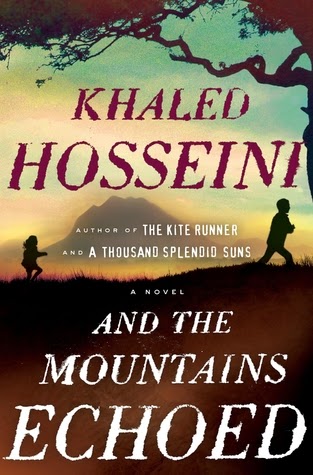
And the Mountains Echoed by Khaled Hosseini. Heartbreaking novel about a string of interlinked families.


Non-fiction: 


The Unthinkable: Who Survives When Disaster Strikes - and Why by Amanda Riply. Very interesting book, full of anecdotes & a bit of research. 

Sunday, 27 April 2014

Book Review: Pantomime by Laura Lam

Title: Pantomime
Author: Laura Lam
Genre: Fantasy, Young Adult, LGBT
Publisher: Strange Chemistry
Published: 2013
Rating: 5 out of 5 stars

A modified blurb (borrowed from The Book Smugglers):  

R. H. Ragona’s Circus of Magic is the greatest circus of Ellada. Nestled among the glowing blue Penglass—remnants of a mysterious civilisation long gone—are wonders beyond the wildest imagination. It’s a place where anything seems possible, where if you close your eyes you can believe that the magic and knowledge of the vanished Chimaera is still there. It’s a place where anyone can hide.

An intersex teen, Iphigenia Laurus, or Gene, raised as the daughter of a noble family, is uncomfortable in corsets and crinoline, and prefers climbing trees to debutante balls. Gene’s parents wish to force a decision on which gender Gene will spend the rest of Gene’s life as, so Gene runs away from home, assumes the identity of Micah Grey, a runaway living on the streets, joins the circus as an aerialist’s apprentice and soon becomes the circus’s rising star. 


Why I read it: A month ago, I’d never heard of this book. Then I noticed it being talked about repeatedly – reviews of the book, reviews of its sequel, discussions on its straightwashed blurb (more on that later) – and bam, my curiosity was piqued. Plus I always want to support the authors who are queering up my favourite genre :D

My thoughts:

So the first thing I did after finishing this book was go straight to Amazon and download the next one. I think that says something about how much I liked it.

The main character is a boy called Micah – a bisexual & intersex lad raised as a lady. (I suppose it’s more accurate to say he identifies as genderqueer rather than male, but I’m using male pronouns for this review.) Pantomime is basically his coming-out story. It follows Micah as he abandons the luxurious world of a noble debutant and careens into the freewheeling life of a circus performer – and honestly, it’s a very fun ride. While Micah does spend a lot of this book lying through his teeth and fearing discovery, he also seems at home at the circus; it suits his reckless & independent side, and of course there’s love on the horizon.

This is a low-magic world, and at times it feels like the fantasy realm Lam has created is little more than window-dressing for Micah’s story. We hear mentions of mysterious domes of penglass littering the landscape, and of expensive vestige artefacts capable of creating illusions. However, these are primarily curios that nobody understands or can fix when broken. The only hint of real magic seems connected to Micah which – along with some odd stories about the intersex gods of old – suggests that Micah’s identity might come complete with magic powers. I’ve read quite a few reviews that rail against this idea, but personally I like it. Without the magic, this book is little more than a queer coming-of-age. There’s nothing wrong with that; I’ve just seen it before. A lot. (Pretty sure I read every single YA LGBTI novel available at the library back in the day.) But this is a fantasy book. Why not tie the sex of the main character to their budding magical ability? Wheel of Time did it (with male & female strains of magic).  Possibly other books have done too. So I don't see why linking magic to intersexuality should be any different. 

I also liked the circus aspect of the story. How could I not? Trapeze artists are awesome. Micah also acknowledges the dismal lives of the animals early on, which I appreciated. At times, the whole thing reminded me of Tipping the Velvet by Sarah Waters (although this is possibly because my brain went preforming arts + queers + 19th century chaos and came up with the closest match, rather than any real similarity between the two novels). I did want more magic & noble politics, but I’m assuming that will come to the fore in book two. Fingers crossed, anyway.

There isn’t much else I can say about this one. It was a fun, short read – definitely recommended.

Also, a couple of thoughts on the blurb:

Laura Lam has stated (on Goodreads, in response to a question I posted) that she didn’t expect Micah’s gender identity to be a spoiler, and that she’d happily describe him as intersex for potential readers.

So the problem was really with Strange Chemistry's marketing team. I don’t understand their decision at all - it doesn't make any sense. The entire plot of this novel is basically about Micah’s quest to control is own life and his eventual coming-out. It has fantasy elements, but they’re minimal. Obscuring the LGBTI content means this book will be a lot harder for queer teenagers to find, and I imagine a lot of queer kids would really want to read this book. As for straight readers… well, the majority of homophobic folks are older, not younger. I seriously doubt this would turn off its intended audience. So... why bother?

Tuesday, 22 April 2014

Top Ten Tuesday: My Favourite Queer Characters

Another Tuesday, another top ten list. (Thanks, The Broke & The Bookish!) This week’s topic is the top ten characters who are insert adjective here. My list? My top ten queers from speculative fiction. Only I've just got 7, because there’s not a lot to choose from. 

I should note that these aren’t the only LGBTI characters in fantasy. There are books I haven’t read that I know have queer content. (Ash by Melinda Lo, I’m looking at you. You’re on my TBR.) There are books I have read that – apparently – have queer characters that I simply don’t recall. (For example, GLBT Fantasy Fiction Resources tells me that The Lions of Al-Rassan by Guy Gavriel Kay has a bisexual male protagonist, and that China Mieville wrote a lesbian into Perdido Street Station. I think I read some books by Mercedes Lackey that had queer characters too, but it was long ago I honestly don’t remember). There are also books that have queer characters deliberately left off this list, because I think they were misrepresented or badly-written. 

Also? The one upside to making this list was discovering that Nicola Griffith (who wrote Hild) is a lesbian. I’ve been planning to get around to Affiny by Sarah Waters for a while now, but I think I might try Griffith’s Slow Rivers instead. It’s got some very nice reviews over on Goodreads. 


1. Phedre No Delauney from the Kushiel’s Legacy novels by Jacqueline Carey.
Love as thou wilt. God, I adore these books. Not only are they absolutely perfect epic fantasy novels, they are full of queer characters doing their thing. I’ve decided to highlight Phedre here because of her enduring connection to Melisande & her overall awesomeness (because who doesn’t love brave, thoughtful, and incredibly sexy linguists?) but honestly, I could have chosen about half the characters from this series to gush over. 


2. Micah Grey from Pantomine by Laura Lam
Micah’s an intersex, bisexual teenager who runs away & joins the circus. He spends a lot of the book being duplicitous and afraid, which makes sense given his circumstances. Still, he seems like a nice guy underneath all the fear. The first book of this trilogy really reads like your standard coming-out-story, just one set in a fantasy world. However, there is a sequel; I can’t wait to read it and watch Micah grow into his own skin (and hopefully start causing some magical chaos!). 


3. Loup & Pilar from the Santa Olivia & Saints Astray books by Jacqueline Carey
I loved these books. From the way Santa Olivia was marketed, you expect to read some dystopian werewolf novel. Instead you get a beautiful coming-of-age tale with a surprise lesbian romance. And these characters! Loup is brilliant, but Pilar… Pilar is amazing. It’s so refreshing to see a flirty, femme heroine doing her thing and still managing to be a badass without being scorned by the text. 


4. Lillia from the Traitor Spy Trilogy by Trudi Canavan
I really like Trudi Canvan’s work: partly because her novels are fun, and partly because she regularly puts queer characters in them. (Yes, I’m shallow. What can I say? I like reading about people who occasionally function like myself!) I liked Dannyl as a character, but Lillia has to be my favourite. She’s one of the main characters in Canavan’s Traitor Spy trilogy, a naïve and earnest girl who gets to fall in love multiple times and will undoubtedly be a force to be reckoned with in the future. 


5. Professor Albus Dumbledore from the Harry Potter books by J. K. Rowling
Yes, I know this was only made canon after the series ended & there’s absolutely no hint of this in the books. (Such a missed opportunity, JK!)  But I spent my teenage years reading far too much Harry Potter fanfic – so as far as I’m concerned, everyone at Hogwarts was gay. The school was basically the magical academy version of Lip Service. Or maybe The L Word. One or the other. 


6. Daisy from the Agent of Hel trilogy by Jacqueline Carey

These books aren’t my favourite because I’m not a huge fan of paranormal romance. However, I really like Daisy. She’s a strong character. She also happens to be bisexual. I don’t care that she swings closer to the het side of the spectrum – there’s nothing wrong with that. It’s just so nice reading stories that feature people with a range of sexualities, especially when queer folk get to be protagonists rather than just the best friend.


7. Daja from the Circle of Magic & Circle Opens Quartets by Tamora Pierce
I was obsessed with Tamora Pierce books as a teenager. Especially her Tortall ones – I read them repeatedly, probably over 50 times. There are quite a few side characters who are queer in her books (Thom, Lalasa, Nestor & Okha, Lark & Rosethorn) but it meant so much me when Daja came out. I think I was so happy I cried! And it certainly cemented The Will of The Empress as one of my favourite YA novels. 

So, who have I missed? Let me know in the comments!